Be ready to adventure and enjoy nature
Walking and Trekking : the most ancient exercise and still the best modern exercise.
Northeastern Tanzania
Moshi Rural, Hai and Rombo
Northeastern Tanzania
Northeastern Tanzania
Northeastern Tanzania
14 - 60
Difficult
Mr. Deepak Solanki / 9099084745
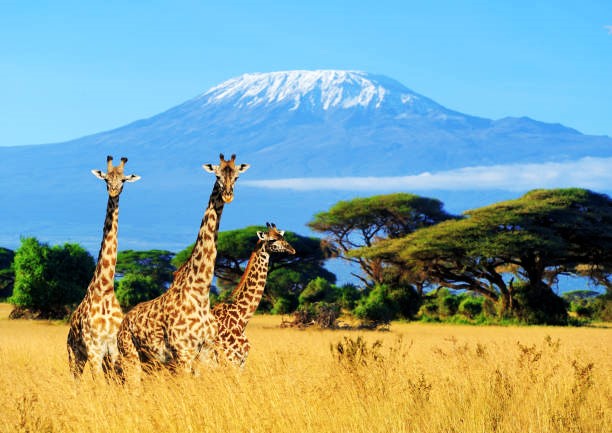
Mount Kilimanjaro, located in northeastern Tanzania, is Africa`s highest peak and the tallest free-standing mountain in the world. Towering at an impressive 5,895 meters (19,341 feet) above sea level, this dormant stratovolcano consists of three distinct volcanic cones: Kibo, Mawenzi, and Shira. Unlike many of the world`s other massive peaks, reaching the summit of Kilimanjaro does not require technical mountaineering skills, making it a highly sought-after destination for adventure seekers and trekkers from all over the globe.
Designated as a UNESCO World Heritage site, the Mount Kilimanjaro National Park protects a stunning array of ecosystems. Trekkers embarking on this journey experience a unique natural phenomenon, hiking through five distinct climate zones in a matter of days. You will begin your journey in humid, lush rainforests at the base, and ultimately push through harsh alpine deserts to reach the freezing, snow-capped arctic conditions at Uhuru Peak.
The ultimate highlight of trekking Kilimanjaro is the chance to stand at Uhuru Peak, the "Roof of Africa," while witnessing a breathtaking sunrise above the clouds. The physical and mental challenge of reaching the summit rewards trekkers with sweeping panoramic views of the African plains, alongside the surreal experience of walking past massive, ancient glaciers located right near the equator
Q: When is the best time to climb Mount Kilimanjaro? A: The most favorable times to climb are during the dry seasons: from late June to October, and from late December to early March. These months offer the most stable weather and clearest skies, though temperatures near the summit will always be well below freezing.
Q: Do I need technical climbing skills to reach the top? A: No, Kilimanjaro is famously known as a "walk-up" mountain. You do not need ropes, harnesses, or technical mountaineering equipment. However, the extreme altitude makes it a strenuous and physically demanding trek. Good cardiovascular fitness, strong stamina, and mental determination are essential.
Q: Which route is the best for acclimatization? A: The Machame Route (7 days) and Lemosho Route (8 days) are highly recommended. Both offer excellent acclimatization profiles by incorporating "climb high, sleep low" days into the itinerary, drastically improving your chances of a successful summit.
Day 1: Machame Gate to Machame Camp. The trek begins with a scenic drive from Moshi/Arusha to the Machame Gate. You will hike through a dense, winding montane rainforest, enjoying the lush vegetation before arriving at Machame Camp (3,000m) for your first night on the mountain.
Day 2: Machame Camp to Shira Camp. Leaving the rainforest behind, the trail ascends steeply into the heath and moorland zone. You will cross a small valley and rocky ridges before reaching the expansive Shira Plateau and Shira Camp (3,840m), offering your first clear, imposing view of the Kibo peak.Day 3: Shira Camp to Barranco Camp (via Lava Tower). This is a crucial acclimatization day. You will hike up to the towering Lava Tower at 4,600m for lunch (experiencing high altitude) before descending down to the beautiful Barranco Camp at 3,950m to sleep, following the "climb high, sleep low" principle.
Day 4: Barranco Camp to Karanga Camp. The day starts with a fun, non-technical scramble up the 257-meter Great Barranco Wall. Afterward, you hike across scenic ridges and valleys to reach Karanga Camp (4,035m), allowing your body further time to adjust to the altitude.
Day 5: Karanga Camp to Barafu Camp. A steady, shorter uphill hike brings you into the desolate alpine desert to Barafu Camp (4,600m). This is your base camp. You will have an early dinner and sleep for a few hours to prepare for the midnight summit attempt.
Day 6: Summit Day! Barafu to Uhuru Peak to Mweka Camp. You begin the grueling ascent around midnight, navigating steep scree slopes in the freezing cold guided only by headlamps. You reach Stella Point at sunrise, then push forward to Uhuru Peak (5,895m)—the highest point in Africa. After an emotional celebration, you descend all the way to Mweka Camp (3,100m) for the night.
Day 7: Mweka Camp to Mweka Gate. A final, gentle descent through the rainforest brings you to the Mweka Gate. Here, successful climbers receive their official summit certificates before returning to the hotel for a well-deserved hot shower and celebration.
All Mount Kilimanjaro National Park gate fees, camping fees, and mandatory rescue fees.
Certified, highly experienced English-speaking mountain guides.
Salaries for all guides, camp cooks, and porters.
All meals on the mountain (Breakfast, Lunch, Dinner) and purified drinking water.
High-quality camping equipment (all-season sleeping tents, dining mess tent, tables, chairs).
60+ Days Before Departure: 100% refund of the trek cost (minus administrative fees or non-refundable initial deposits).
30 to 59 Days Before Departure: 50% refund of the total package cost.
15 to 29 Days Before Departure: 25% refund of the total package cost.
Less than 15 Days / No Show: No refund will be issued. (Note: As unforeseen circumstances can arise, it is strictly advised that all participants purchase comprehensive travel insurance that includes trip cancellation coverage).
⭐⭐⭐⭐⭐ "The Challenge of a Lifetime!" - Sarah M. "Climbing the Machame route was the most physically and mentally demanding thing I`ve ever done, but reaching Uhuru Peak at sunrise made every single step worth it. The guides were incredible—constantly checking our oxygen levels and keeping our spirits high with `Pole Pole` (slowly, slowly). The food was surprisingly amazing for being cooked on a mountain!"
⭐⭐⭐⭐⭐ "An Unforgettable Experience" - David L. "From the lush rainforests on day one to the glacial peaks on summit day, the landscape changes are absolutely mind-blowing. The Barranco Wall scramble was an absolute blast and a nice break from standard hiking. Make sure you rent a very warm sleeping bag and budget well for tips, because the porters are the real heroes of this mountain. Highly recommend this trek to anyone looking for an epic adventure."

Walking and Trekking : the most ancient exercise and still the best modern exercise.